
Lady Wisdom - Divine Co-Creator
Oct 13, 2026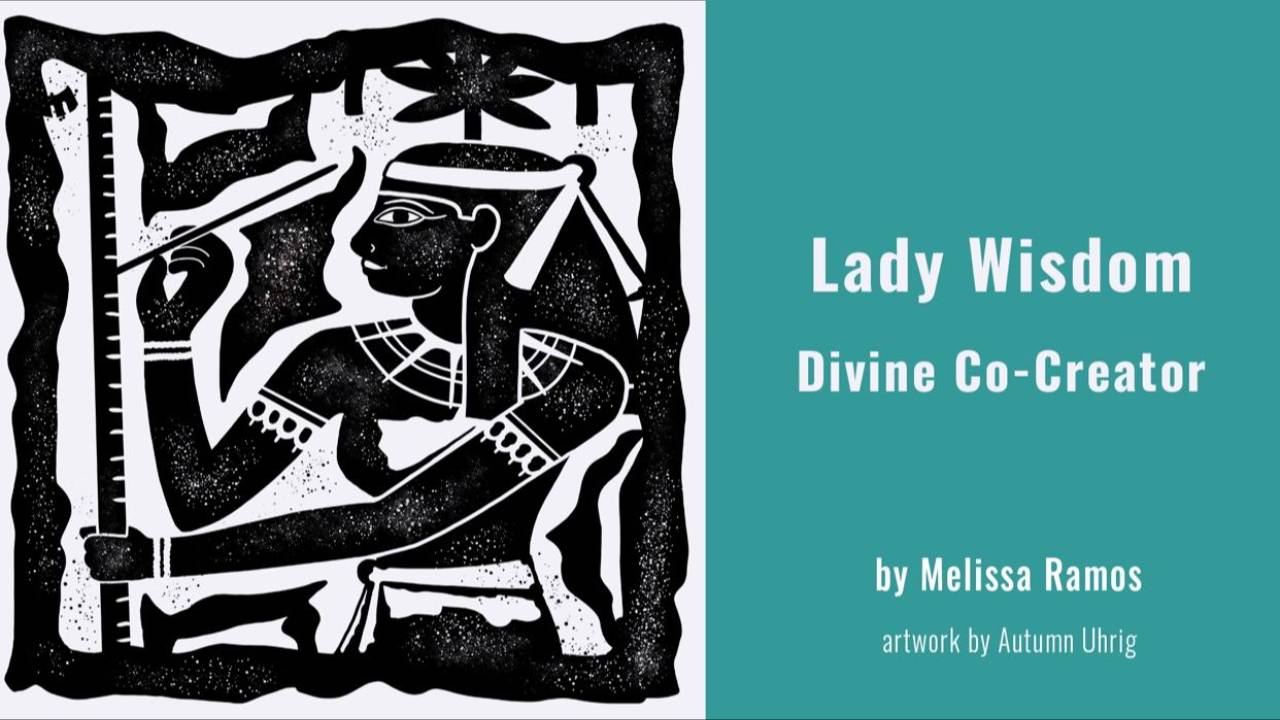
Many of our readers may have encountered teachings on “The Proverbs 31 Woman.”The "virtuous woman" or "woman of noble character" has long been presented as the ultimate blueprint for biblical womanhood—a domestic powerhouse who wakes up before dawn, runs a home business, manages real estate, and keeps her household spotless.
Fewer of us have learned about Lady Wisdom, the primary female character of the book of Proverbs.
In a previous post on The Proverbs 31 Woman: The Woman of Strength, we explored how viewing Proverbs 31 through its proper ancient context transforms it from an exhausting checklist into an empowering poem of strength. But to truly unlock what Proverbs is doing with gender, character, and theology, we have to step back from the final chapter of the book and look at how the entire collection begins.
Before the Proverbs 31 figure ever steps onto the scene, the Book of Proverbs introduces us to another foundational figure who shapes the entire worldview of biblical wisdom: Lady Wisdom (Hebrew: Chokmah).
1. Wisdom Cries Out in the Public Square
In Proverbs 1:20, we encounter Lady Wisdom not tucked away in a quiet domestic space, but out in the open city streets:
"Wisdom cries out in the street; in the squares she raises her voice. At the busiest corner she cries out; at the entrance of the city gates she speaks."
In the ancient Near East, the city gate was the center of public leadership, judicial governance, and economic transaction. By placing Lady Wisdom at the busiest intersections and public gates, the author of Proverbs presents divine wisdom as an active, public authority calling out to all of humanity. She is not a passive idealized figure; she uses her voice, and is an authoritative, pervasive presence inviting everyone—regardless of gender—into a life of discernment, courage, and truth.
2. Co-Creator and Divine Companion (Proverbs 8:22–31)
When we reach Proverbs 8, the text takes a stunning theological turn. Lady Wisdom delivers her own monologue, revealing her origin story and her place in the cosmos.
"The Lord created me at the beginning of his work, the first of his acts of long ago... When he established the heavens, I was there... when he marked out the foundations of the earth, then I was beside him, like a master worker (amon), and I was daily his delight, rejoicing before him always..." (Proverbs 8:22, 27, 30–31)
To describe Lady Wisdom's presence at creation, the author of Proverbs deliberately weaves in the rich creation vocabulary of Genesis 1–3:
- Beginning (reshit / רֵאשִׁית)
- The Deeps (tehom / תְּהוֹם)
- Earth (eretz / אֶרֶץ)
- Day (yom / יוֹם)
Lady Wisdom is presented not merely as an abstract concept or a poetic personification of good advice. She is described as being present before the cosmos took shape—playing, rejoicing, and laboring alongside the Creator as a master craftsperson (amon).
3. Echoes of the Divine Name (Ehyeh)
One of the most fascinating linguistic connections in Proverbs 8 comes in how Lady Wisdom describes her own existence. In Proverbs 8:30, her self-description uses Hebrew forms that evoke the sacred self-revelation of God to Moses at the burning bush in Exodus 3:14 ("I AM WHO I AM" — Ehyeh asher Ehyeh).
By framing Lady Wisdom with language that echoes God’s own divine self-disclosure (Ehyeh), the text presents Wisdom as a direct reflection of God's character and presence in the world. She embodies divine agency, creativity, and structural integrity for all people.
4. Re-Reading Proverbs 31: Wisdom for Everyone
Understanding Lady Wisdom in Proverbs 8 radically alters how we read Proverbs 31:10–31.
Notice the language used to describe the "Person of Strength" in Proverbs 31:
- They are described as being worth "far more than jewels" (Prov 31:10).
- This directly mirrors how Lady Wisdom is introduced in Proverbs 3:15 and Chapter 8: "She is more precious than jewels, and nothing you desire can compare with her."
When we recognize these intentional literary connections, we realize that Proverbs 31 is not an exclusive standard written only for women to perform, nor is it a guide for men to find a worthy spouse. It is an all-gender passage intended for every reader.
Proverbs begins in chapters 1–9 with the cosmic, theological vision of Lady Wisdom co-creating with God, lifting her voice in the public square, and ordering the cosmos. It then closes in chapter 31 by showing what that divine wisdom looks like when translated into ordinary life: integrity, industriousness, justice, care for the vulnerable, and creative initiative.
In ancient literary terms, the poem in Proverbs 31 personifies wisdom in action. Readers of all genders are meant to see themselves in this picture—to embody strength, work with diligence, speak with wisdom, and steward their homes and communities with justice.
The Takeaway: Beyond Gendered Checklists
When we separate Proverbs 31 from the rest of the book and restrict it as a female-only performance evaluation, we miss its theological depth. But when we place Proverbs 31 alongside Proverbs 8, we see a much grander, all-inclusive call.
We are not called to measure up to an exhausting perfectionist standard. Instead, all of us are invited to align our lives with the dynamic, joyful, cosmic Wisdom that has been weaving beauty, strength, and justice into the fabric of creation from the very beginning.
Personally, I would love to hear about a men’s Bible study group that focuses on Proverbs 8 and 31!
Rev. Dr. Melissa Ramos, author
Artwork by Autumn Uhrig
